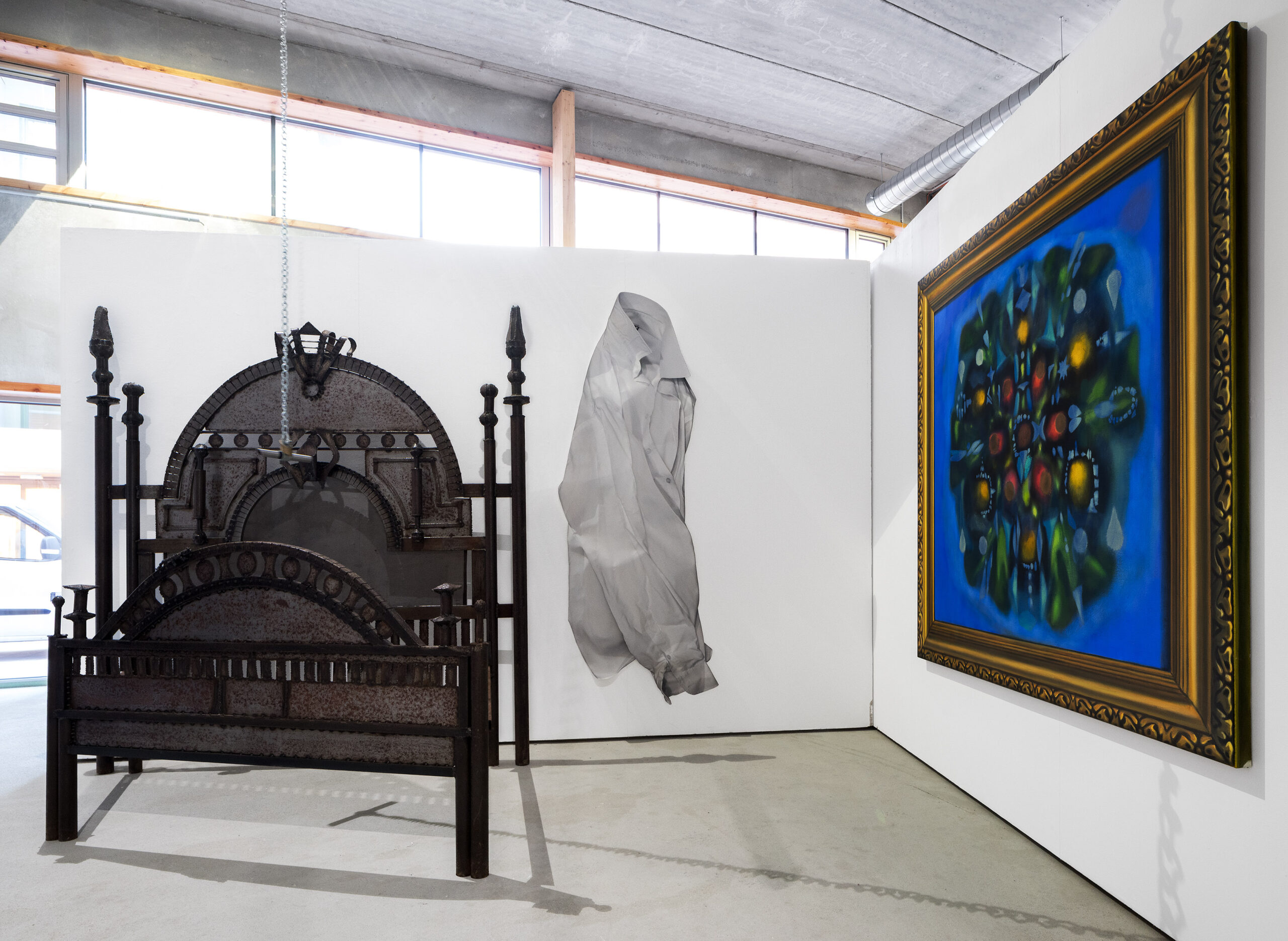
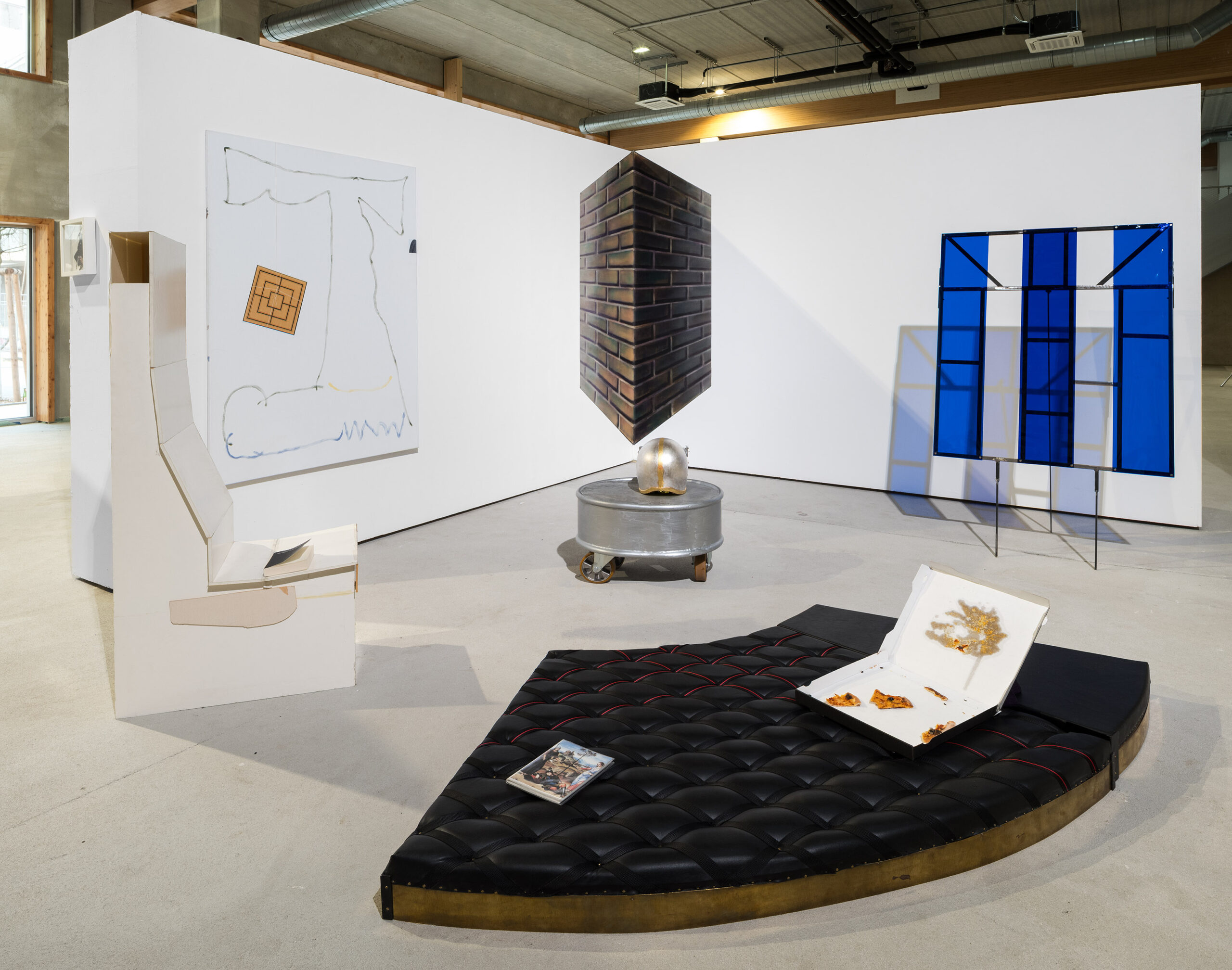
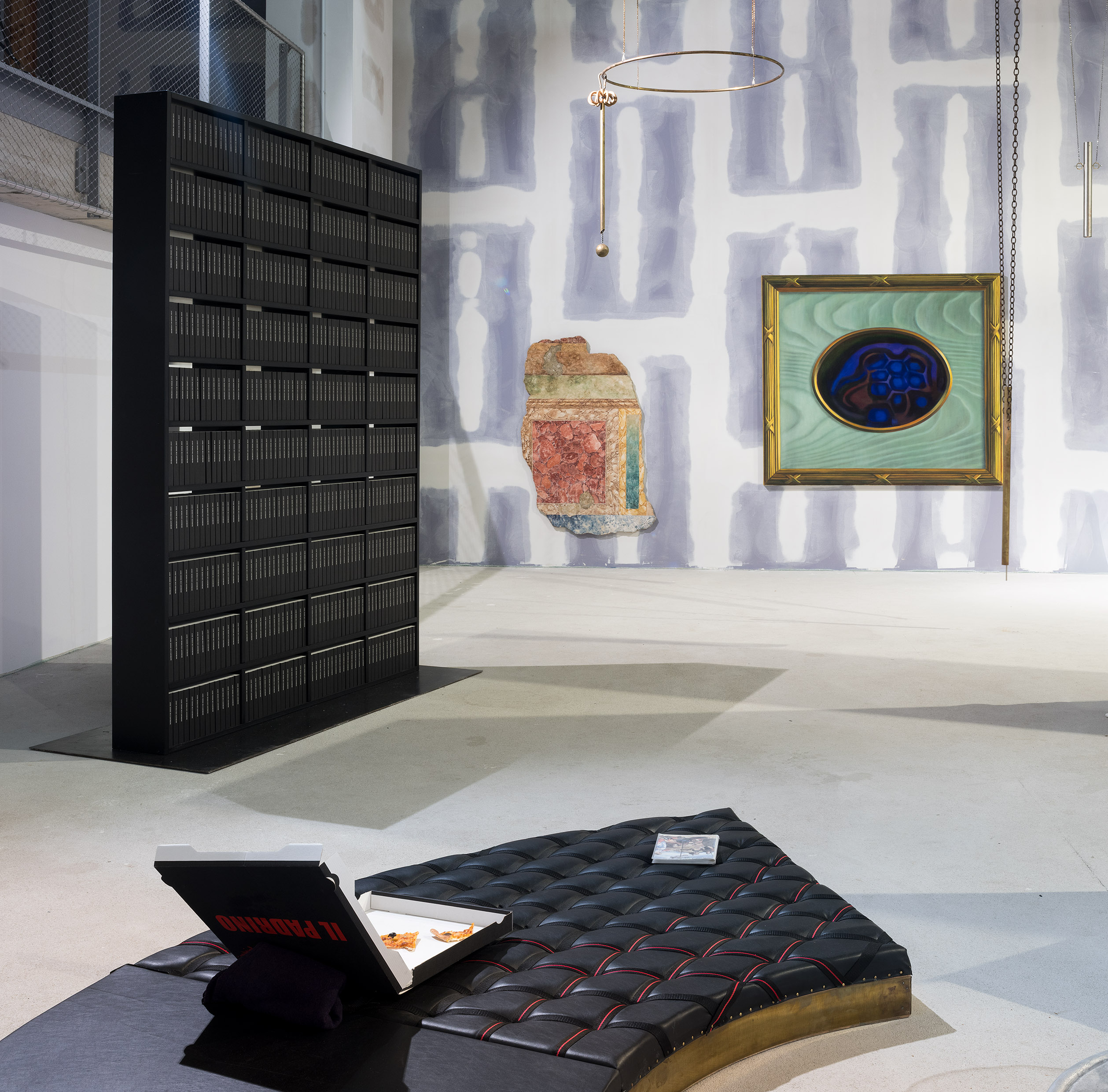
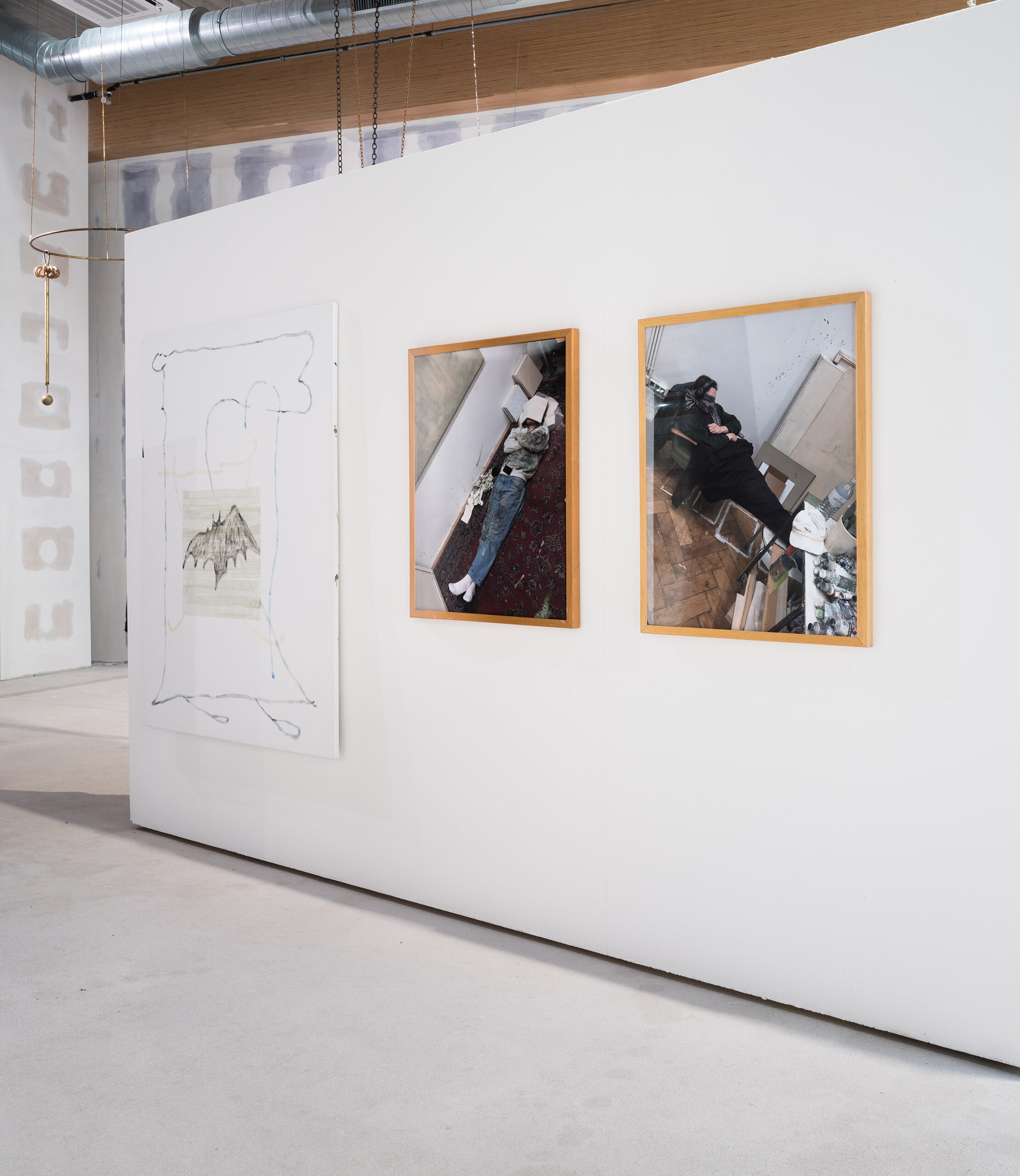
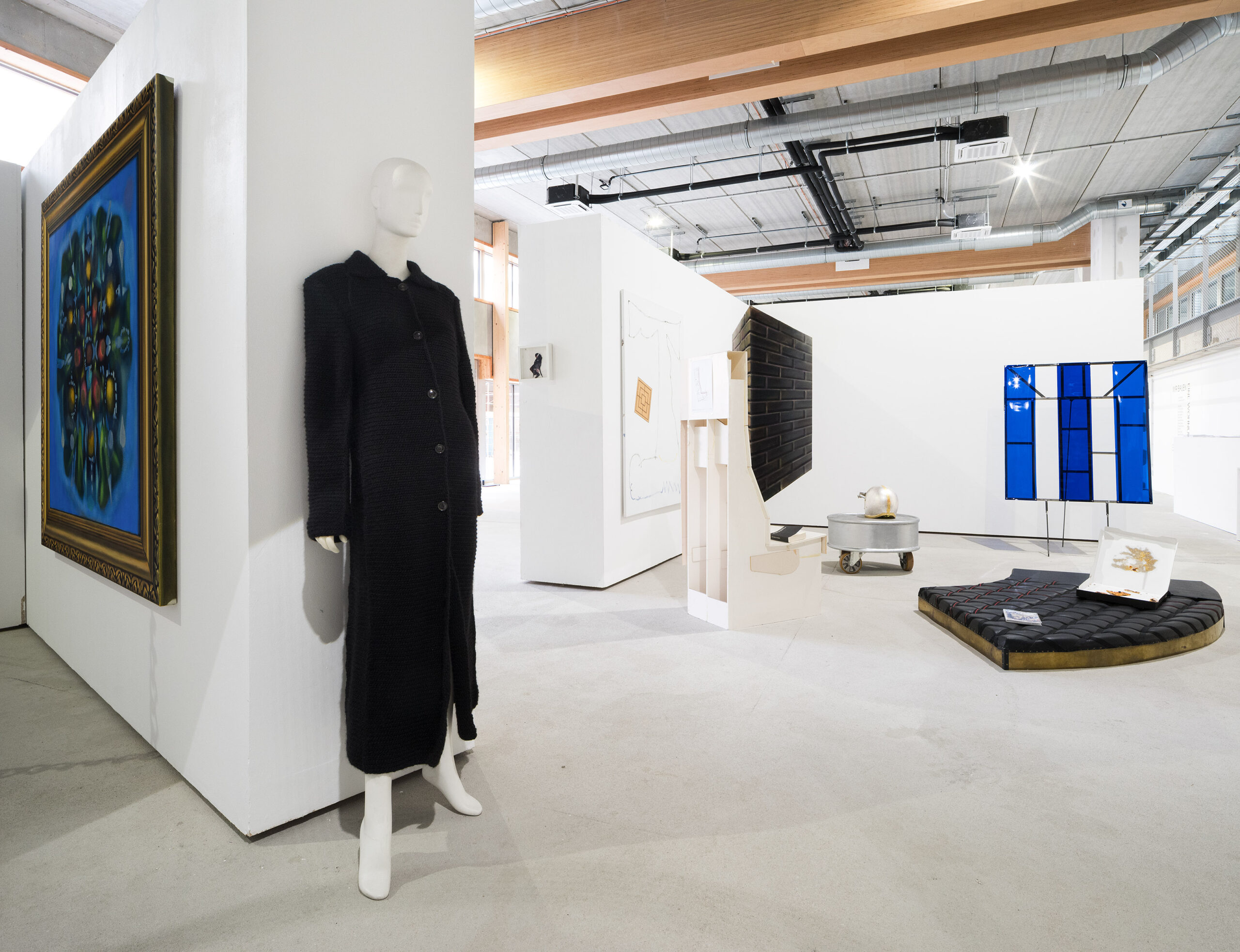
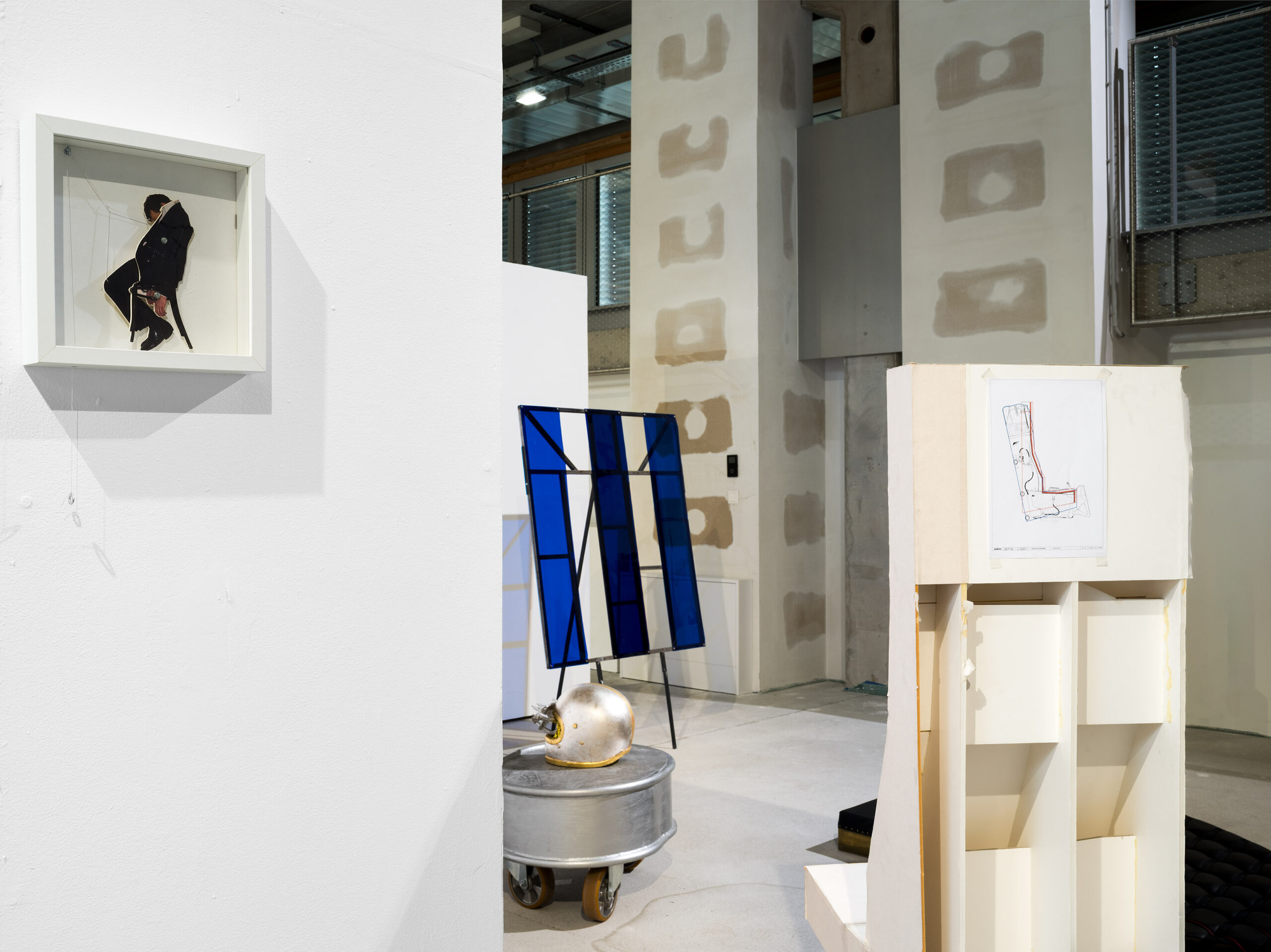
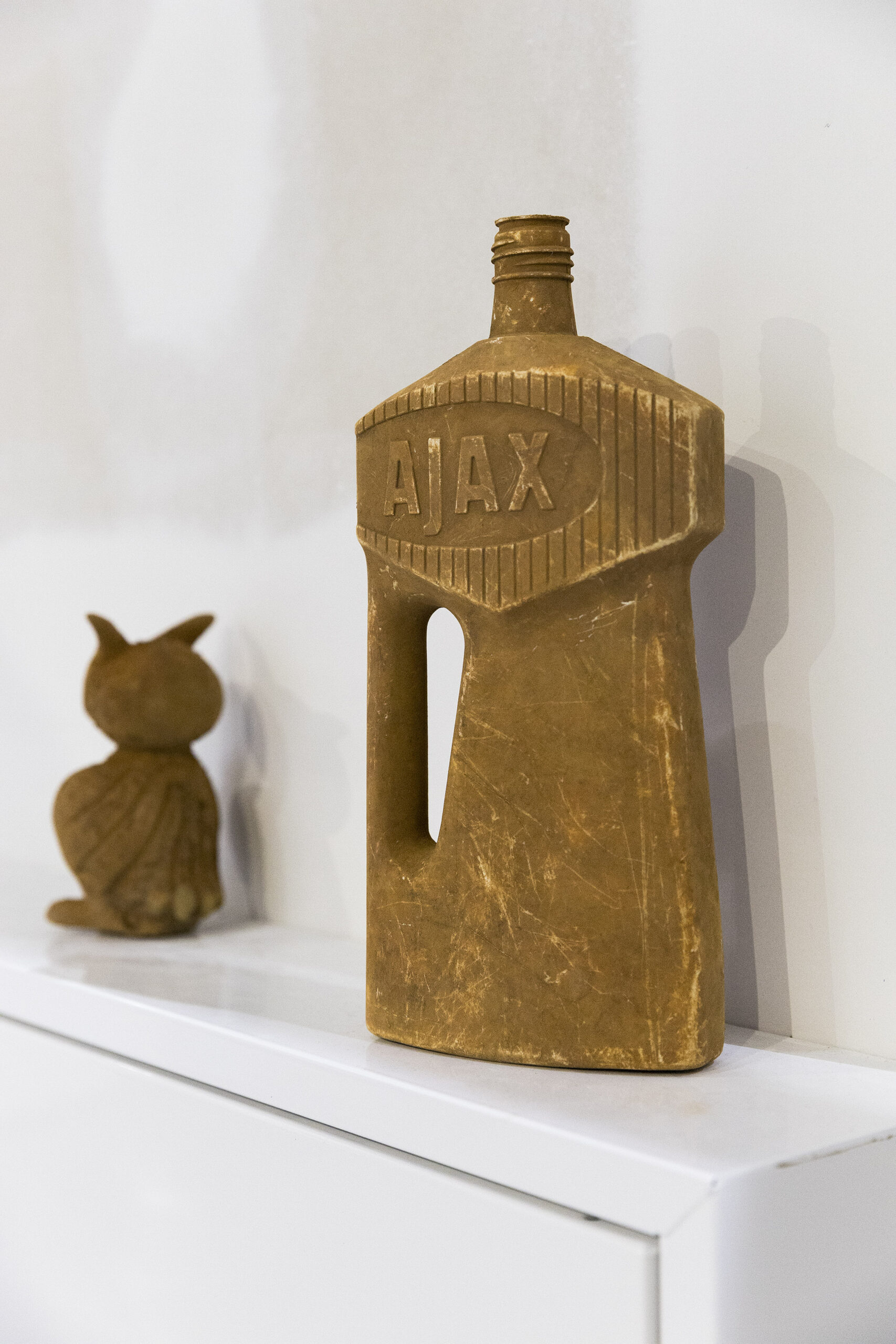
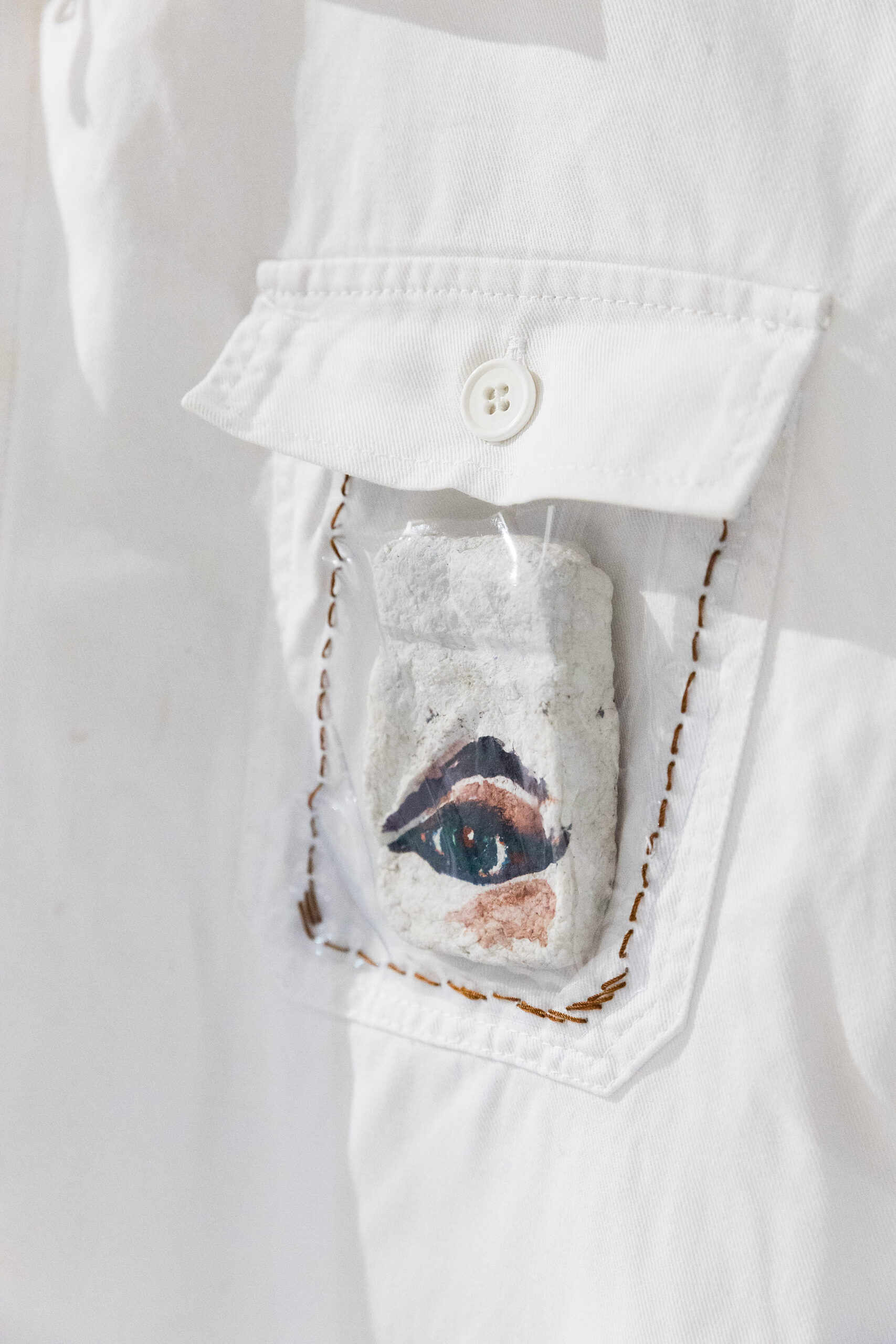
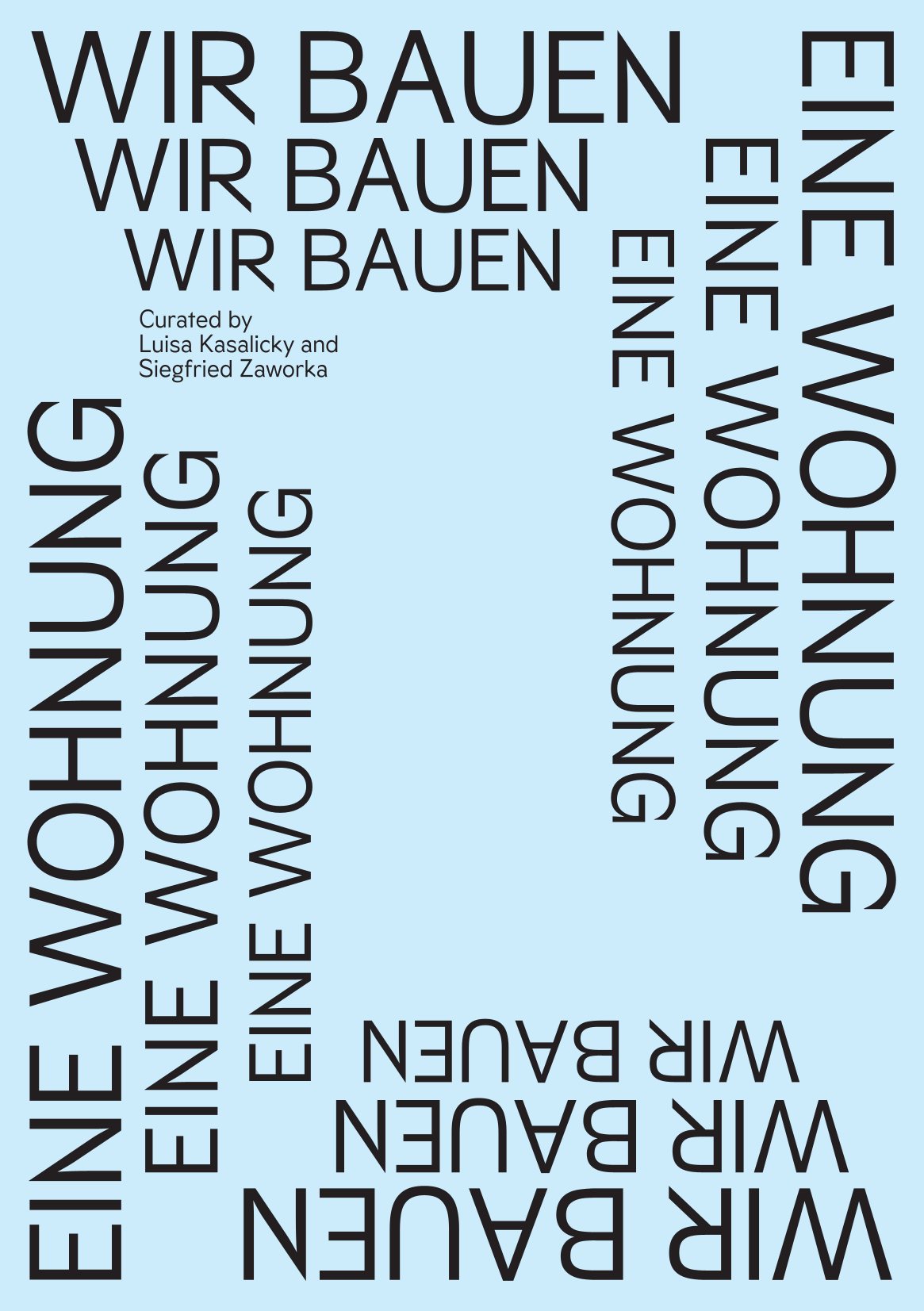
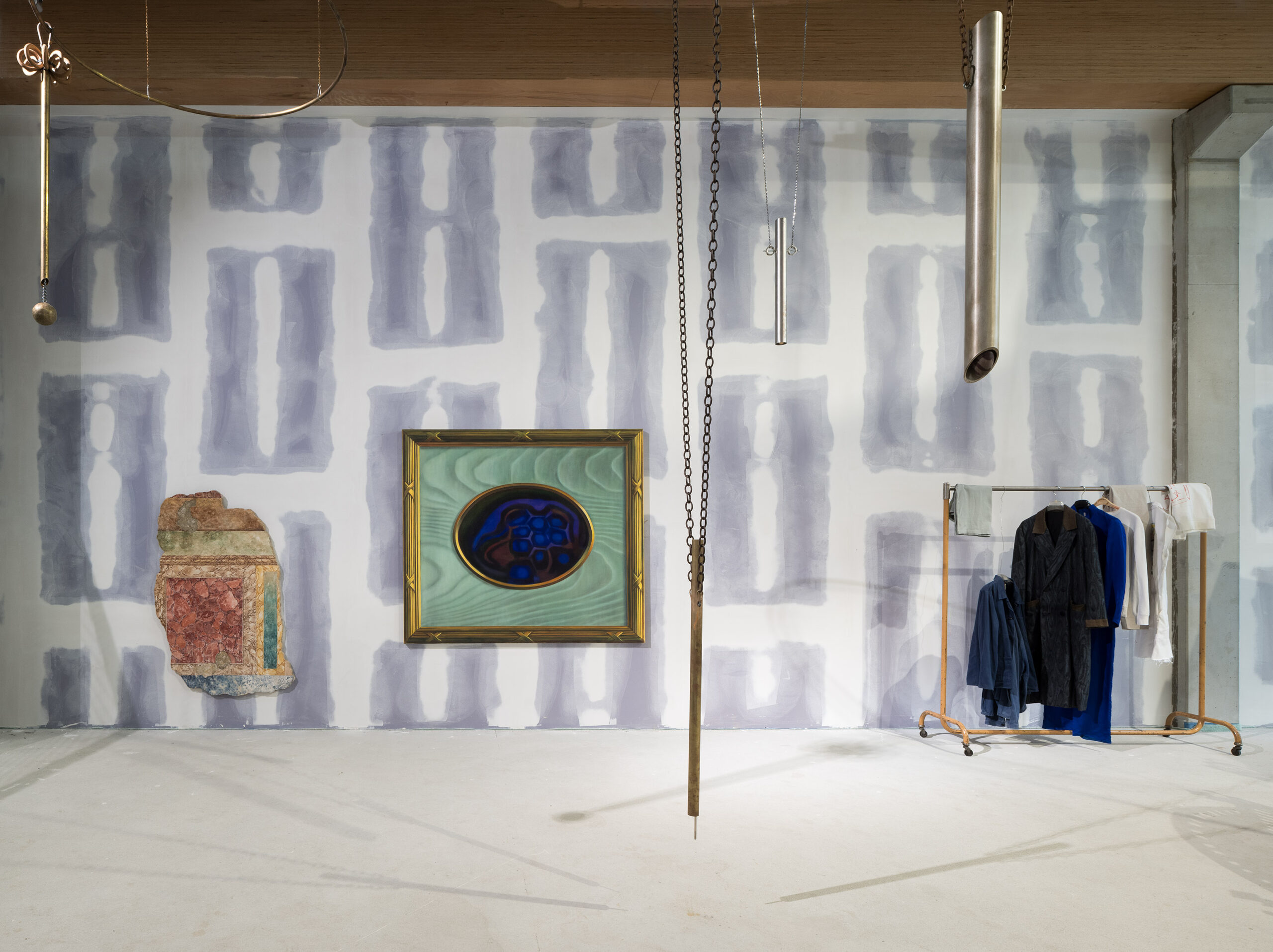
»In a symbolic spatial arrangement, everyday objects that document our existence, or fragments thereof, are examined in aesthetic terms. Spaces overlap and merge into one another as if in a dream, and the objects of daily life sometimes elude us with their peculiar presence. A first, second, and third look at function, representation, and the relationship to the body dissolves the concept of utilitarian objects into questions of human existence.«
Luisa Kasalicky and Siegfried Zaworka
Artists
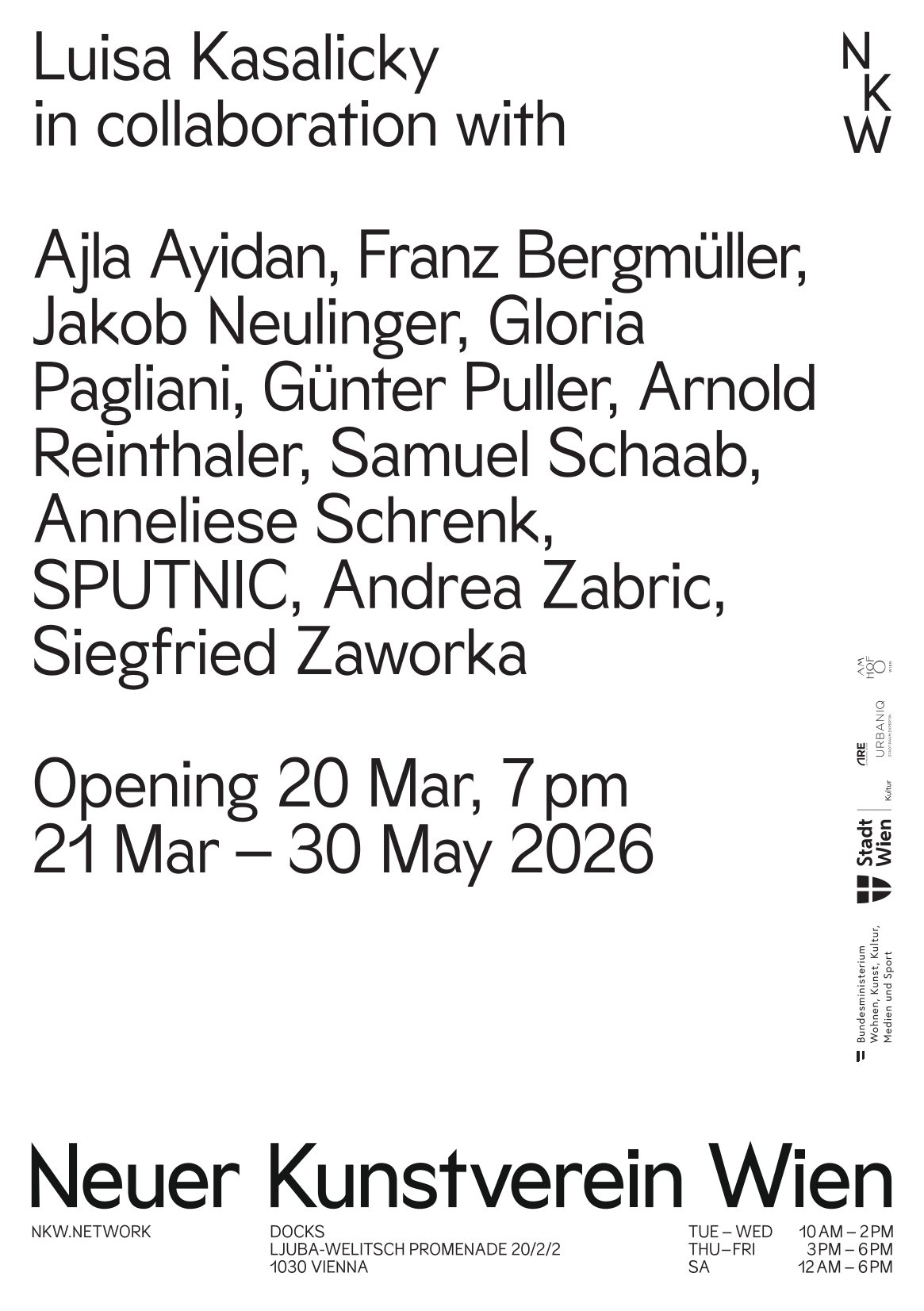
Luisa Kasalicky in collaboration with Ajla Ayidan, Franz, Bergmüller, Jakob Neulinger, Gloria Pagliani, Günter Puller, Arnold Reinthaler, Samuel Schaab, Anneliese Schrenk, SPUTNIC, Andrea Zabric, Siegfried ZaworkaCurators
Luisa Kasalicky and Siegfried ZaworkaOpening
20.03.2026, 7pmDuration
21.03.2026 -18.06.2026Graphics
Anna Liska
»So he got together all the necessary building materials, and had them laid down in this piece of ground. After which, he was to be seen all day long, in his usual extraordinary costume--which he always made with his own hands, on peculiar principles of his own--slaking the lime, sifting the gravel, arranging the stones in heaps, etc., etc. He had not gone to any architect for a plan. But one fine day he walked in upon the principal builder, and told him to come next morning to his garden, with the necessary workmen--stonemasons, hodmen and so forth--and build him a house. The builder, of course, asked to see the plan, and was not a little astonished when Krespel said there was no plan and no occasion for one; everything would go on all right without one.
The builder arrived next morning with his men, and found a great rectangular trench, carefully dug in the ground. 'This is the foundation,' Krespel said. 'So set to work, and go on building the walls till I tell you to stop.' 'But what about the doors and windows?' asked the builder. 'Are there to be no partition walls?' 'Just you do as I tell you, my good man' said Krespel as calmly as possible come quite right in its own good time.'«
E.T.A. Hoffmann: Rat Krespel, inital release, 1818
read less